




IPL Treatment for Dry Eye
FAQ
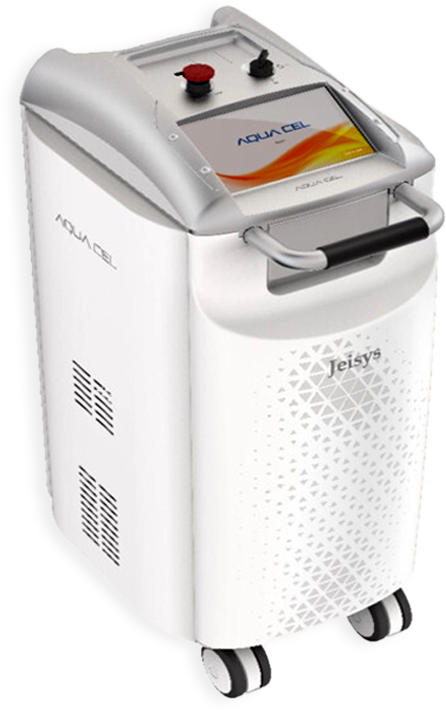
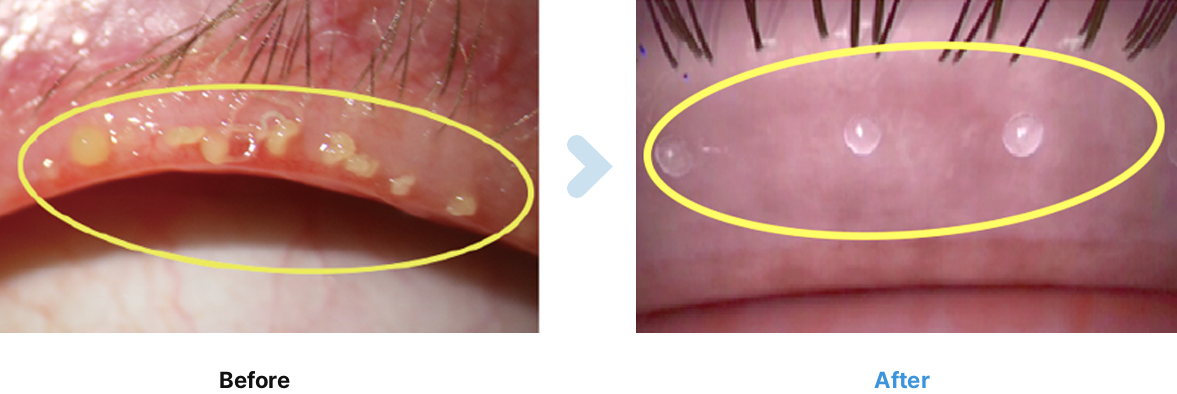
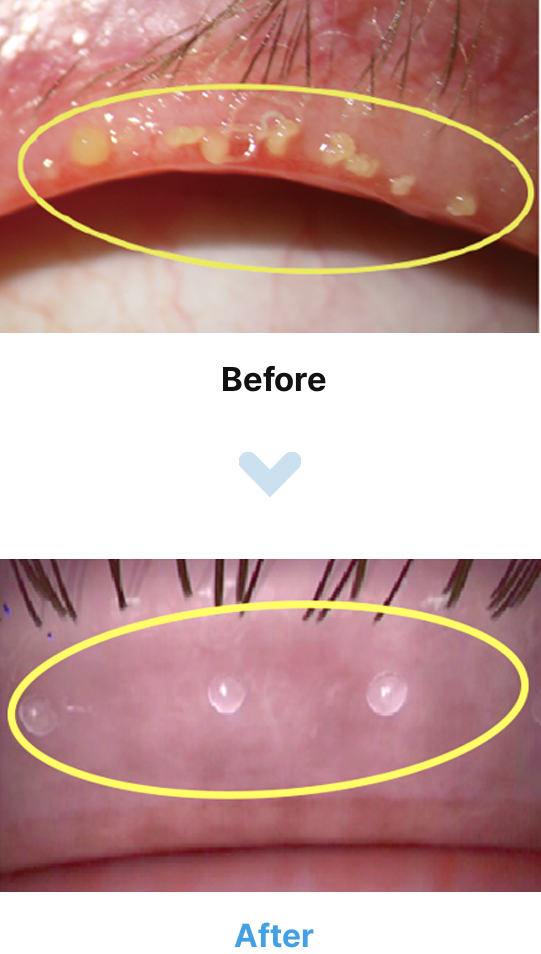
A dry eye treatment program that addresses blockage of the eyelid meibomian glands that release the tear lipid layer. It proceeds in the order of warm compress, IPL, meibomian gland expression, eyelid cleansing with a dedicated cleanser, and a soothing skin mask.
Our tests include a meibomian gland scan, tear secretion measurement, tear film thickness analysis, inflammatory marker measurement, tear film analysis, and comprehensive dry eye analysis. The tests you need depend on your symptoms, and we will explain your testing plan at your visit.
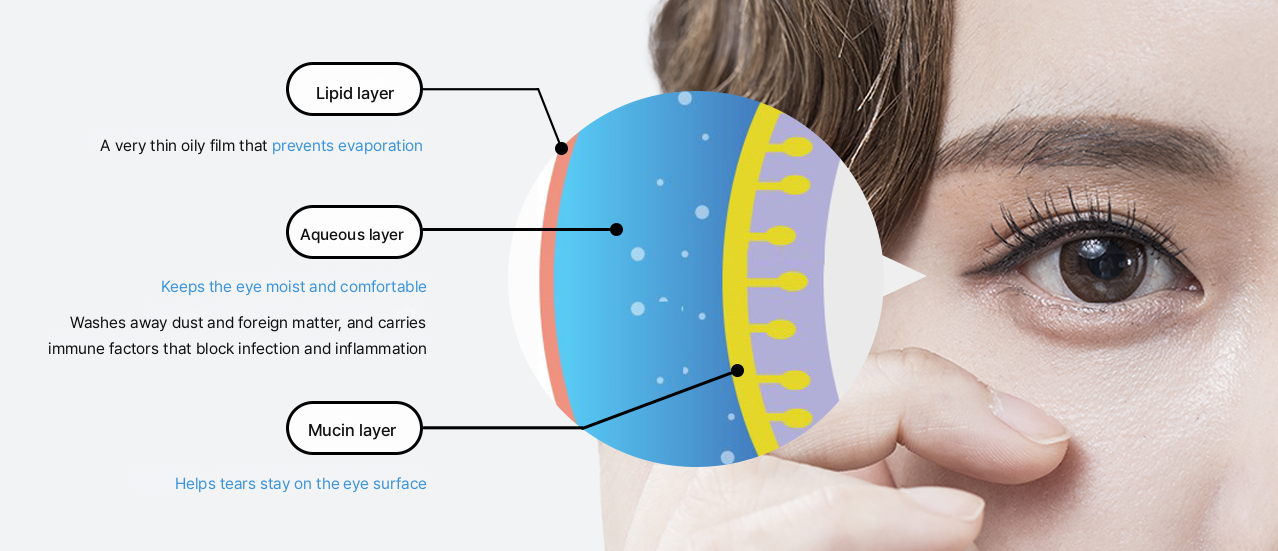
They are oil glands in the eyelids. They create the outer lipid layer of the tears so that tears do not evaporate quickly.
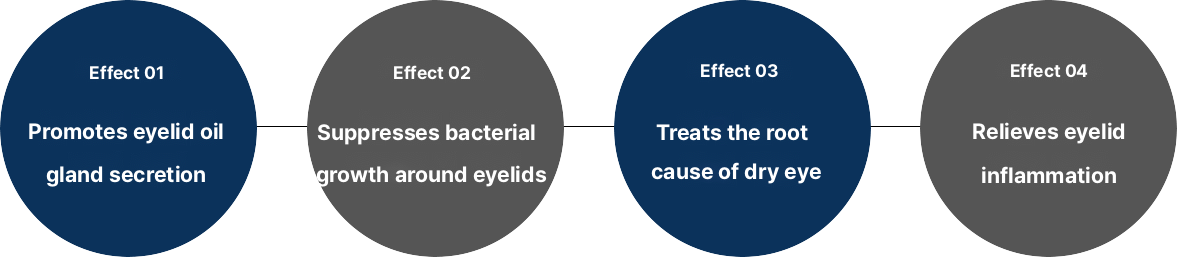
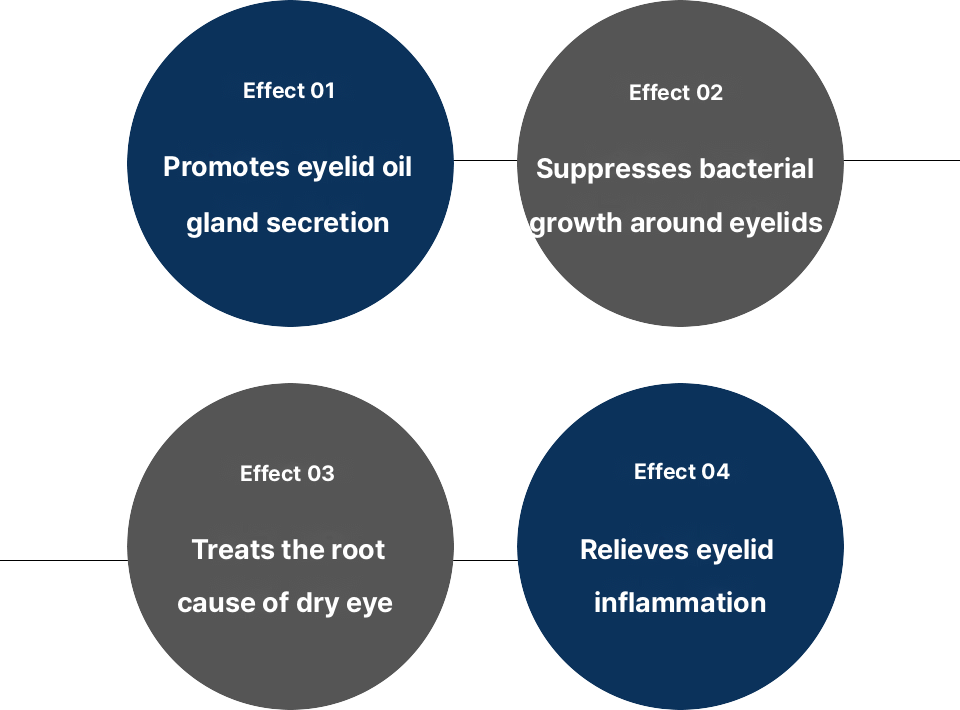
It shines light on the skin around the eyelids to generate heat and helps release hardened oil from the meibomian gland openings. The goal is to thicken the tear film and relieve dry eye.
It removes debris built up along the eyelid margin with a dedicated cleanser. This step cleans the area around the openings where the meibomian glands release oil.
We do not operate right away when dryness is severe. We first determine the cause and treat it, then reassess the tear film. In cases of extreme dryness such as Sjögren’s syndrome, we do not recommend surgery.
Reduced tear production and rapid evaporation because the oil layer is not released are different. If it is the latter, artificial tears alone may not provide lasting relief. Testing determines which it is.
One test alone is not enough to diagnose and assess dry eye. Management differs depending on whether tear production is low, tears evaporate too quickly, or there is inflammation.
The oil layer gets thinner and tears evaporate quickly. Meibomian gland dysfunction is one of the important causes of dry eye, and in this case artificial tears alone do not stay on the eye long enough.
No. We decide after determining the cause with a meibomian gland scan, tear film analysis, and inflammatory marker measurement. If testing shows that a different treatment should come first, we will recommend that instead. We cannot say whether it is possible without test results.
After warm compresses and IPL loosen the hardened oil and we express the meibomian glands, wiping around the area clears the pathway so it does not clog again. That is why this step comes after gland expression in Clean-n-Therapy.
The duration and number of sessions vary by test results and progress, so we do not set them in advance. We decide the timing after seeing whether the tear film stabilizes.
When dryness is severe, we treat it before surgery. We also assess the tear film during preoperative testing to decide the order of treatment and surgery.
Meibomian gland dysfunction is one of the important causes of dry eye. If the oil layer is not released, tears evaporate quickly, so artificial tears alone do not stay on the eye for long.
It is a procedure that expresses the hardened oil clogging the meibomian gland openings. We first loosen the hardened oil with warm compresses or IPL, then proceed.
The number of sessions and intervals vary with the degree of blockage and how things progress, so we do not set them in advance. We will guide you after checking during your visit.
The area and method differ from ordinary face washing. We provide separate home-care instructions during your visit, and they vary depending on the condition of the eyelid margins.
Recovery after surgery depends on the condition of the tear film, and the degree of dryness varies from person to person. The extent to which corneal surface nerves are affected differs by method, so tests determine which option is appropriate.
Depending on the results, we decide whether to start with warm compresses and IPL, to add eyelid cleansing, or to address inflammation first. Care from examination through management is personalized.
It depends on the degree of blockage. If it doesn’t clear with warm compresses, IPL and gland expression follow. A meibomian gland scan shows which is needed.


