





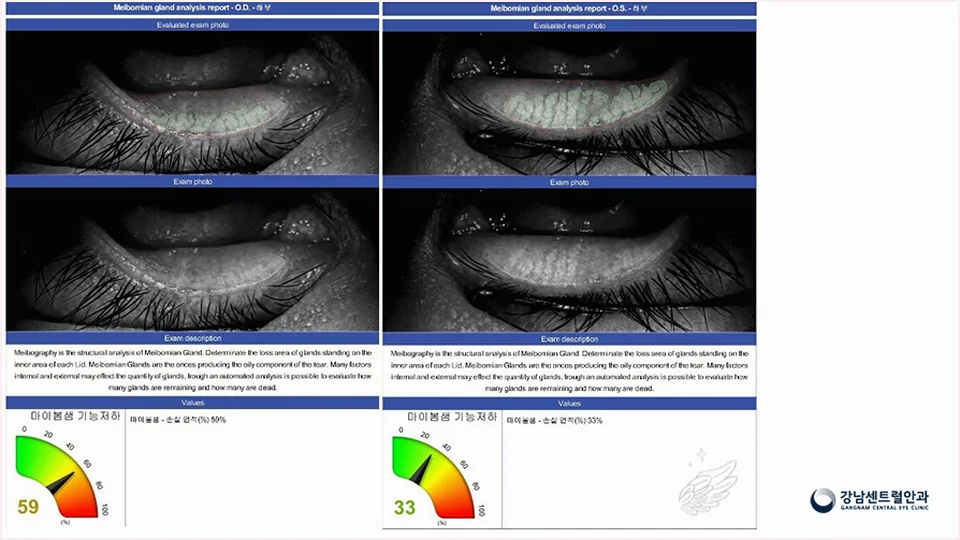
They review your symptoms and examine the tear film, eye surface, and eyelids. TBUT measures stability after a blink; Schirmer testing estimates tear production; staining highlights surface damage; meibography images gland structure. The clinician combines the findings and checks for other causes of discomfort or blur.

Why is there no single definitive dry-eye test?
The tear film contains interconnected lipid, aqueous, and mucin components and depends on blinking, eyelids, nerves, and the ocular surface. Two people who both say their eyes feel dry may have very different combinations of evaporation, low tear production, inflammation, exposure, or neuropathic symptoms.
TFOS DEWS II describes dry eye as a multifactorial disease involving loss of tear-film homeostasis. The examination therefore starts with symptoms and medical history, then uses tests to locate the dominant pattern and check for surface damage.
What do TBUT, Schirmer, staining, and meibography measure?
The National Eye Institute lists slit-lamp evaluation, Schirmer testing, and tear break-up time among common tests. Clinics may add noninvasive tear stability, osmolarity, meibography, gland expression, lid imaging, and symptom questionnaires depending on the case.
Results are influenced by environment, blinking, recent drops, contact lenses, and measurement method. Tell the examiner what you used before the visit and follow preparation instructions.
Meibography is a structural test, not a direct measure of oil secretion or tear-film stability. Read the meibography test and gland-dropout guide if your report includes gland images or a gland-loss score.
| Test | What it measures | What it cannot answer alone |
|---|---|---|
| TBUT or noninvasive break-up time | How long the tear film remains stable after blinking | The exact cause of instability |
| Schirmer test | Paper-strip wetting as an estimate of tear production | Evaporation and oil quality |
| Corneal and conjunctival staining | Location and severity of surface-cell damage | All causes of pain or fluctuating vision |
| Meibography | Structure and apparent loss of meibomian glands | Current secretion quality and symptom severity |
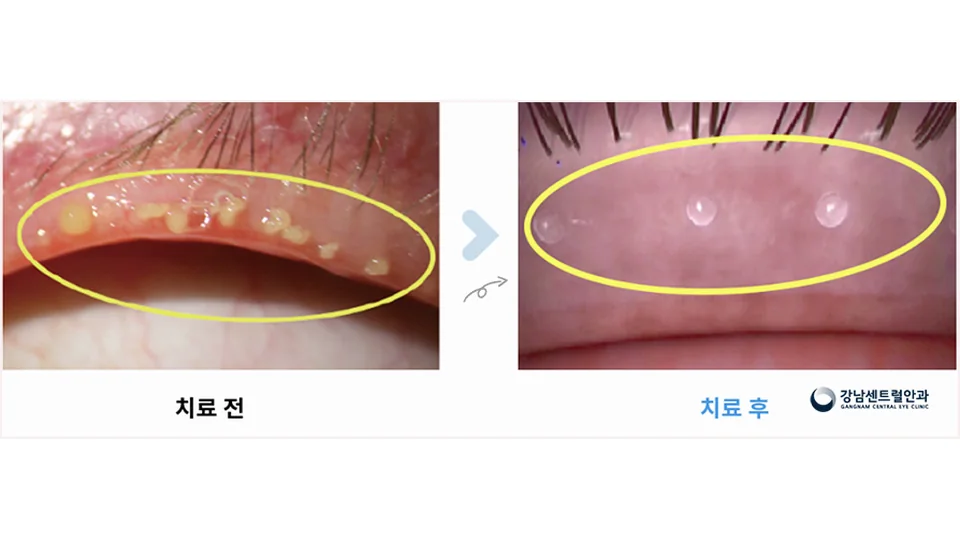
| Gland expression | Ease and quality of oil secretion | Tear volume and retinal causes of blur |
| Lid and blink assessment | Inflammation, closure, blink completeness | Full tear composition |
What if my dry-eye symptoms and test results disagree?
One normal result does not explain every symptom. For example, adequate paper-strip wetting does not by itself show that tears remain stable between blinks, and a preserved gland image does not prove normal oil expression. Ask which findings support the diagnosis and whether another condition needs assessment.
Burning, grittiness, redness, light sensitivity, tearing, and fluctuating blur are common dry-eye complaints, but symptom intensity does not always match the amount of visible staining. The clinician also considers allergies, eyelid disease, contact-lens wear, medications, autoimmune conditions, and prior surgery.
Describe when symptoms occur. Blur that improves after a blink can suggest tear-film instability, while a sudden fixed defect or new distortion needs assessment for other eye conditions.
Should I stop eye drops or contact lenses before testing?
Do not stop prescribed medicine unless instructed. Ask whether contact lenses, eye makeup, artificial tears, or warm compresses should be paused before testing, because preparation varies with the planned measurements.
Bring a list of drops and medicines, contact-lens type and wear time, screen hours, workplace airflow, sleep conditions, and previous eye procedures. Note which treatments helped and for how long.
- Time of day symptoms are worst
- Whether blinking temporarily clears blur
- Drop brand and daily frequency
- Contact-lens comfort and maximum wear time
- History of allergies, eyelid inflammation, autoimmune disease, or eye surgery
Which results should be checked at a dry-eye follow-up?
Follow-up should assess whether the patient's symptoms and daily function are improving and whether relevant signs such as tear stability, staining, lid inflammation, or secretion have changed. Not every test needs to be repeated at every visit.
The target is not a perfect machine score. It is a more stable ocular surface, manageable symptoms, and a plan that can be maintained safely.
Ask which finding is driving the treatment plan and which symptom or test will be used to judge progress.
Frequently asked questions
Is there one definitive dry-eye test?
No. Dry eye is multifactorial, and the diagnosis usually combines symptoms with tear stability, tear production, surface staining, eyelid, and gland findings.
What does TBUT measure?
Tear break-up time measures how long the tear film remains continuous after a blink. A short time indicates instability but does not identify every cause by itself.
What does a Schirmer test measure?
It measures how much a paper strip is wetted over a set time as an estimate of tear production. Method and context affect interpretation.
Can dry eye cause blurry vision?
Yes, an unstable tear film can cause fluctuating blur, often changing with blinking. Persistent, sudden, or one-sided blur should be evaluated for other causes.
Should I stop artificial tears before testing?
Preparation depends on the tests and clinic protocol. Ask the clinic in advance and do not stop prescribed medication without medical advice.
Medical references
This article was checked against public guidance from medical authorities and professional organizations.
Medical information standards
This article was prepared from publicly available ophthalmology guidance and the clinic's examination process. A diagnosis or treatment plan can only be made after an individual eye examination and consultation.
- Clinic director: Pung GyeHyeon, MD · Ophthalmologist
- Organization: Gangnam Central Eye Clinic · Seoul, Korea
- Published / last updated: 2026-09-13 / 2026-10-03
This article is general medical information and is not a substitute for personal diagnosis or treatment. Seek prompt eye care for sudden vision loss, severe pain, marked redness, flashes, or a new curtain-like shadow.