

FAQ
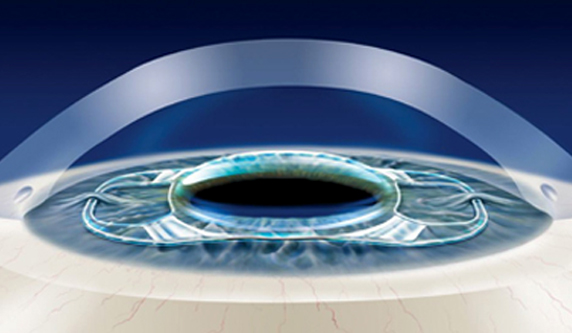
It means we do not remove corneal tissue with a laser. We leave the cornea as it is and correct vision by placing a lens with your prescription inside the eye. Testing first confirms that there is room for the lens. We do not promise a specific level of vision.
No. We leave the cornea as it is and correct vision by placing a lens with your prescription inside the eye. Testing first confirms that there is room for the lens.
Only if the exam clearly shows you are eligible and you do not need a custom-made lens. If the anterior chamber is shallow or the status is borderline, we will reschedule.
No. We assess eligibility by checking anterior chamber depth and angle, anterior chamber space, corneal endothelial cell count, and the astigmatic axis. If the exam shows you are not suitable, we will suggest another option or not recommend surgery. We cannot advise on eligibility without test results.
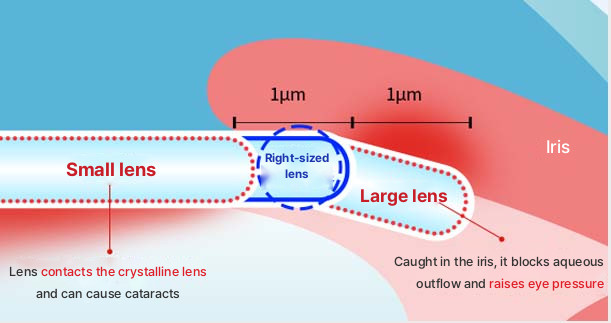
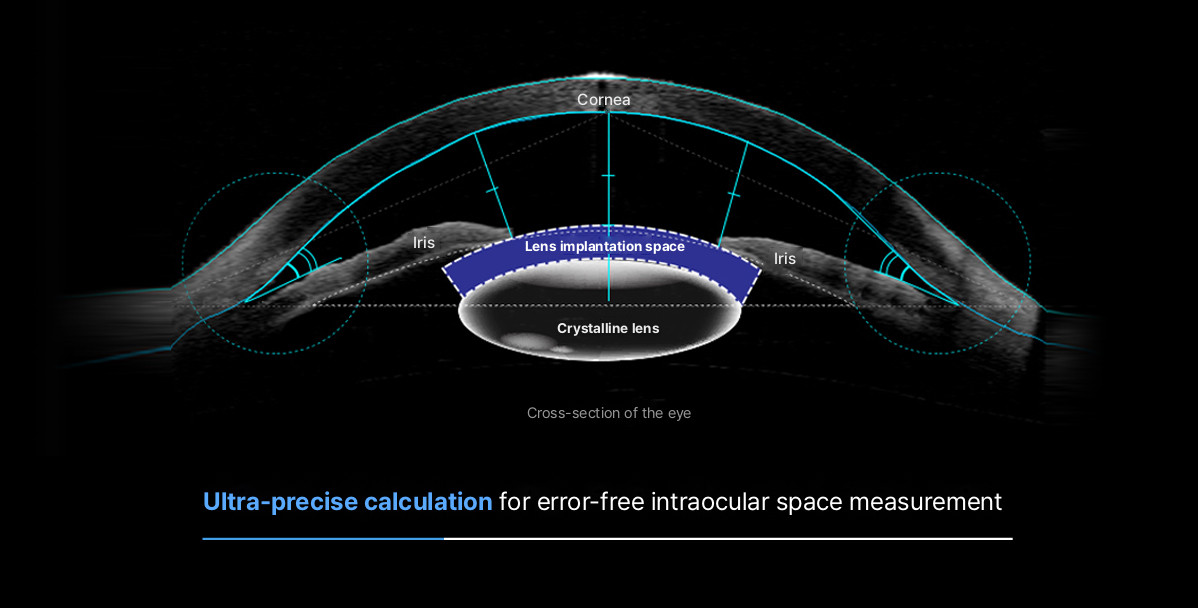
We measure the anterior chamber angle and space. If the lens is too small, it can touch the crystalline lens and cause cataract; if too large, it can impede aqueous outflow and cause glaucoma.
Stop soft lenses for at least 5 days and hard lenses for at least 7 days before your visit. Otherwise, the corneal shape may still be altered by lens wear, and the values will differ.
We evaluate both whether there is room in the eye for the lens and whether your prescription falls within range. We decide based on those measurements.
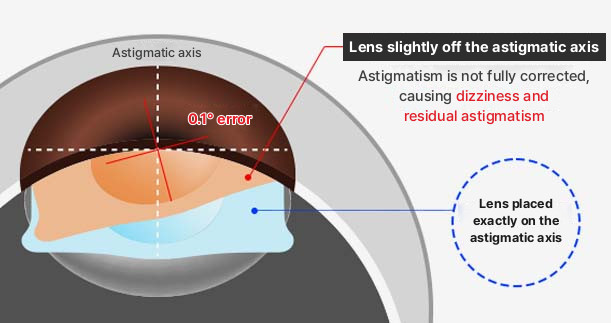
We measure the astigmatic axis and power separately and use them to set the lens position, because misalignment from the axis leaves residual astigmatism.
We use both at Gangnam Central Eye Clinic. Which one is used is determined by exam results, considering intraocular space and prescription range.
You can usually resume daily activities the next day, and stabilization is typically between 1 week and 1 month. However, this varies by person, so we do not promise a set timeframe.
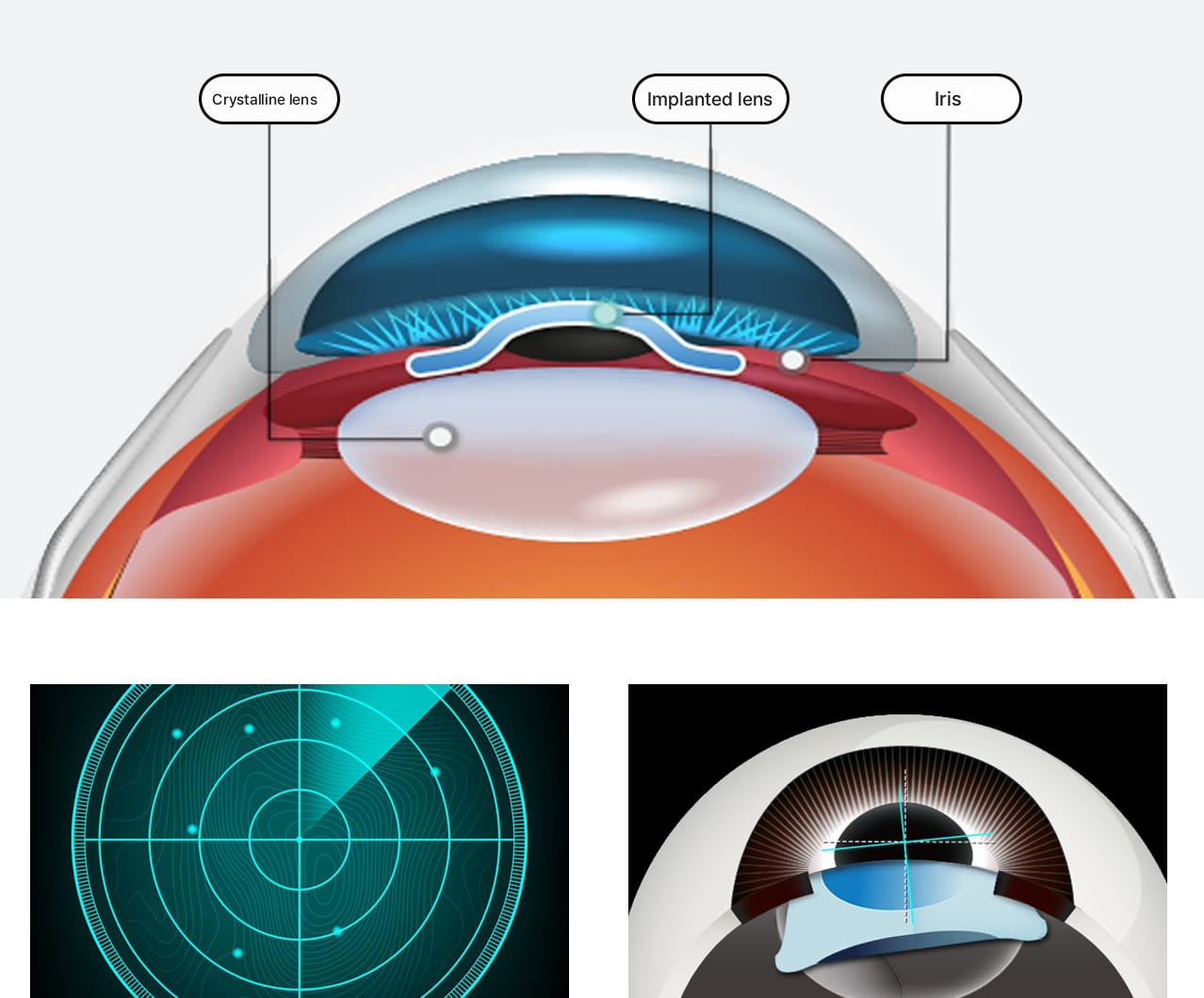
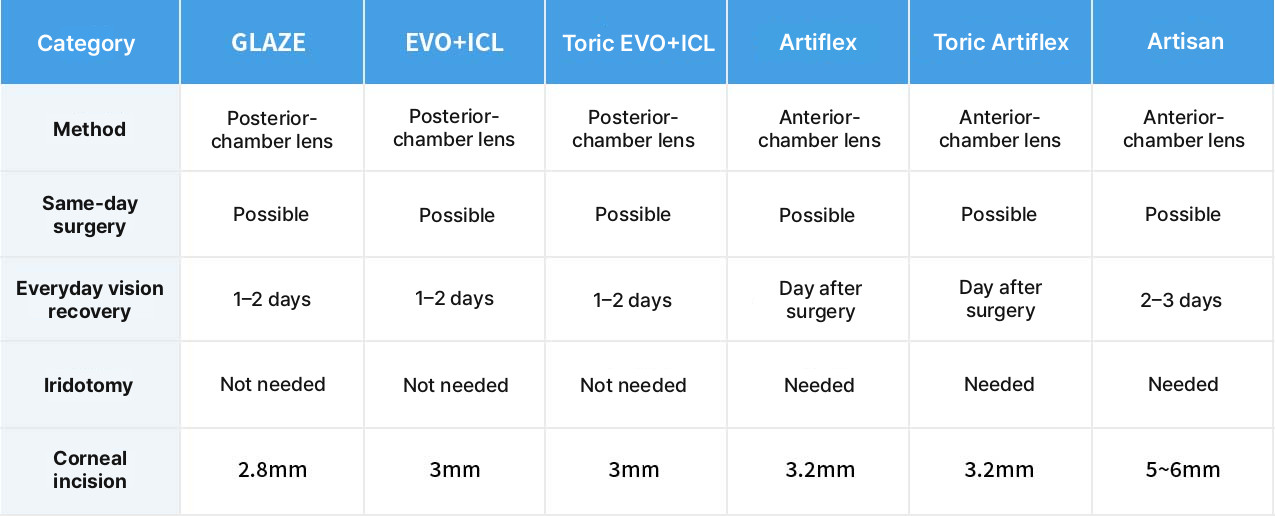
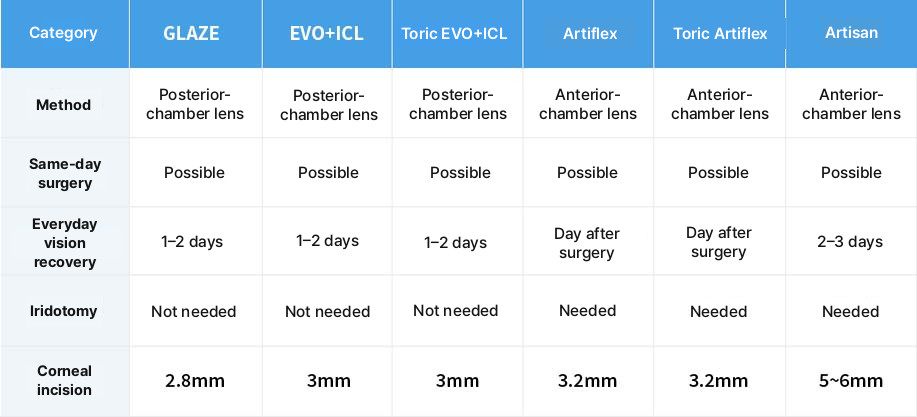
GLAZE, EVO+ ICL, and Toric EVO+ ICL are posterior-chamber lenses, while Artiflex, Toric Artiflex, and Artisan are anterior-chamber lenses. The need for iridotomy, the size of the corneal incision, and the visual recovery time differ by type, and we choose the right lens based on your test results.
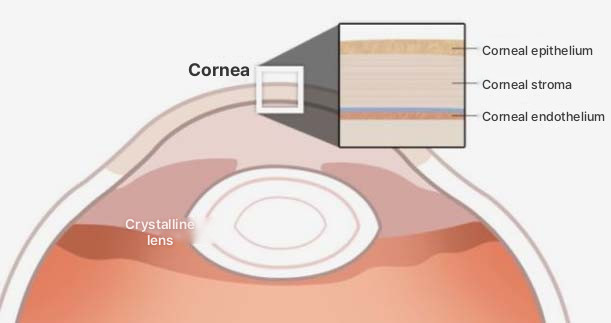
Because corneal endothelial cells do not regenerate once damaged. We therefore count them before surgery and make decisions according to US FDA safety standards.
Both are lenses we use for implantable lens surgery at Gangnam Central Eye Clinic. Which one is used is determined by exam results, considering intraocular space and prescription.
We check anterior chamber depth and angle, anterior chamber space, corneal endothelial cell count, and the astigmatic axis.
It measures the distance between the crystalline lens and the posterior corneal surface and determines whether there is room for the lens. For safe implantable lens surgery, the US FDA sets minimum anterior chamber depths of 3.2 mm for anterior-chamber lenses and 3.0 mm for posterior-chamber lenses. If below the criteria, we consider other options.
We provide a surgery certificate to patients who have undergone implantable lens surgery. It is a document so you can verify which procedure you received.
The normal range is considered 2,000–3,000 cells/mm², and because they do not regenerate once damaged, we decide on surgery according to US FDA safety standards. If this value does not meet the criteria, we do not recommend this method.
Stop soft lenses for at least 5 days and hard lenses for at least 7 days before your visit. Otherwise, the corneal shape may still be altered by lens wear, and the values will differ.
We check your progress at 1 day, 1 week, 1 month, 2 months, and 3 months, and from 6 months to 1 year we also look at long-term stability, night vision, and dry eye. After that, we recommend a checkup once a year. Recovery speed varies from person to person, so we do not promise a set timeframe.


