





You need a comprehensive eye examination. The same prescription can require different plans in two people because corneal shape, thickness, tear-film condition, pupil behavior, retinal health, healing risks, and visual goals differ.
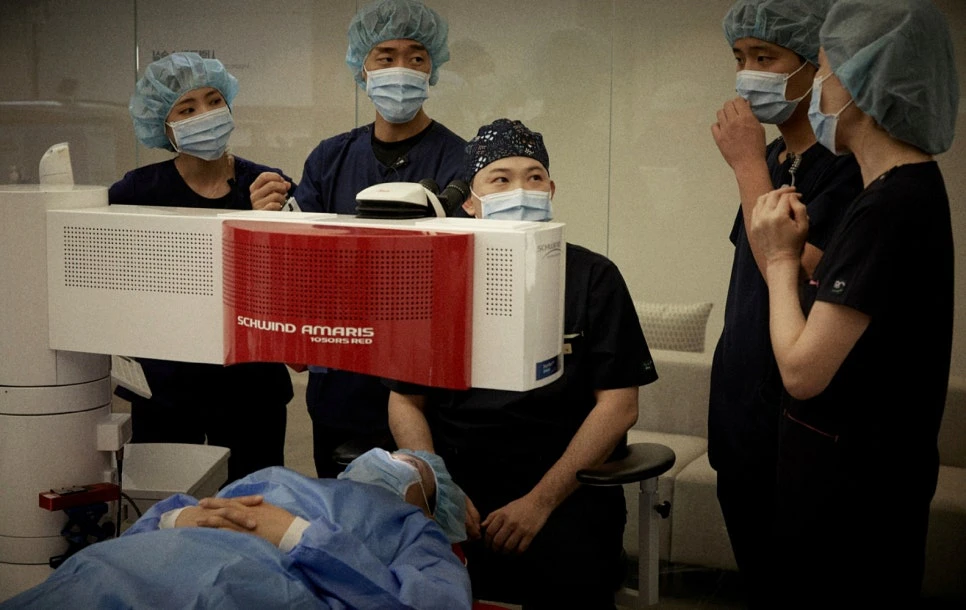
Which five parts of the examination drive the decision?
A responsible examination confirms what can be corrected, whether the cornea can be treated with an appropriate margin, whether the ocular surface will support reliable measurements and healing, and whether another eye condition limits the expected result.
If results disagree, repeating a test is a sign of careful planning rather than a failed examination. Contact-lens effects, dry eye, fixation, and natural measurement variability can all matter.
| Decision area | Key measurements | Question answered |
|---|---|---|
| Prescription | Manifest and sometimes cycloplegic refraction | Is the correction stable and repeatable? |
| Corneal shape | Topography or tomography | Is the pattern regular and free of concerning features? |
| Tissue planning | Pachymetry, treatment estimate, residual tissue | Is there an appropriate structural margin? |
| Optical and surface quality | Pupil, aberrations, tear film, lids | What may affect night vision, comfort, and measurement reliability? |
| Whole-eye health | Pressure, slit lamp, dilated retina as indicated | Is another condition present or a different option safer? |
Why is corneal shape as important as thickness?
A single central-thickness number does not show how thickness is distributed or whether the front and back corneal surfaces are symmetric. Tomography can reveal patterns that make elective corneal reshaping less appropriate even when the central value does not look unusually low.
Treatment amount also matters. A higher correction generally changes more tissue, so the surgeon evaluates the proposed optical zone, flap or cap plan, ablation or lenticule profile, and residual structural measurements together.
Ask to see the corneal shape map and hear how the planned correction and remaining tissue are assessed together.
Which conditions may delay or rule out LASIK?
The FDA lists unstable refraction, thin corneas, keratoconus, dry eye, large pupils, some eye diseases, certain healing-related medical conditions or medicines, and pregnancy or breastfeeding among factors that require caution or may make LASIK inappropriate.
This does not mean every listed factor has the same effect for every person. It means the surgeon must identify it, explain the added uncertainty or risk, and consider treatment, delay, or an alternative.
- Prescription that has recently changed
- Suspicious corneal topography or tomography
- Insufficient tissue for the planned correction
- Active ocular-surface or eyelid disease
- Cataract, glaucoma, retinal disease, infection, or inflammation
- Medical conditions or medications that may alter healing
- Expectations that cannot be met by refractive surgery
Why do dry eye and the retina matter in a myopic patient?
An unstable tear film can make refraction and corneal measurements less repeatable and can worsen comfort after surgery. Treating significant ocular-surface disease before a final plan may improve both measurement quality and informed expectations.
Higher myopia is associated with retinal risks that corneal surgery does not remove. Flashes, a sudden increase in floaters, or a curtain-like shadow require urgent retinal assessment whether or not someone has had refractive surgery.
What alternatives should be part of informed consent?
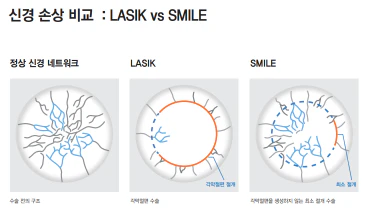
Alternatives may include glasses, contact lenses, PRK or LASEK, small-incision lenticule extraction, or a phakic intraocular lens. The list depends on local availability and the person's anatomy and goals.
A complete consultation explains why the recommended option is preferred, why another is less suitable, what the realistic benefit is, and what adverse effects or future glasses needs remain possible.
Flashes, many new floaters, or a curtain-like shadow can signal a retinal emergency and require urgent eye care, especially in a highly myopic eye.
Frequently asked questions
What prescription is too high for LASIK?
There is no responsible universal cutoff divorced from the device indication, corneal shape, thickness, treatment zone, tissue plan, and surgeon assessment. High prescriptions often require comparison with other options.
Can thin corneas have LASIK?
Central thickness alone does not decide. Distribution, corneal shape, planned correction, and residual tissue are assessed; an alternative or no surgery may be advised.
Why must my prescription be stable?
If refraction is changing, a permanent corneal correction may soon be inaccurate. Stability is reviewed through prescription history and repeat measurements.
Can dry eye disqualify me from LASIK?
Significant dry eye may require treatment and repeat testing, and in some cases may change the recommended procedure. The cause and severity matter.
Does LASIK prevent retinal problems from high myopia?
No. LASIK changes the cornea and does not shorten the eye or remove myopia-related retinal risk. Continue recommended retinal examinations.
Medical references
This article was checked against public guidance from medical authorities and professional organizations.
Medical information standards
This article was prepared from publicly available ophthalmology guidance and the clinic's examination process. A diagnosis or treatment plan can only be made after an individual eye examination and consultation.
- Clinic director: Pung GyeHyeon, MD · Ophthalmologist
- Organization: Gangnam Central Eye Clinic · Seoul, Korea
- Published / last updated: 2026-09-13 / 2026-09-13
This article is general medical information and is not a substitute for personal diagnosis or treatment. Seek prompt eye care for sudden vision loss, severe pain, marked redness, flashes, or a new curtain-like shadow.