





Yes, but the plan should be built around a comprehensive examination and postoperative care rather than a same-day promise. Your prescription, corneal shape and thickness, tear film, pupil size, and retinal health can change both candidacy and the procedure that is recommended.
Vision correction surgery in Korea: what to confirm before booking
Vision correction surgery in Korea is not a single treatment package. If you are considering LASIK in Korea, begin by deciding what you want to change in daily life and by asking what can be determined before arrival versus what needs an examination. A preliminary quote or online prescription review should remain separate from a surgical recommendation.
LASIK surgery in Korea should be discussed together with the tests, alternatives, and postoperative plan relevant to you. Ask who will explain the findings, what happens if you are not a candidate, and whether further appointments may be needed before a decision. Do not let a flight date turn a provisional enquiry into an assumed treatment booking.
For local consultation questions, read vision correction in Gangnam and Seoul. For communication, records, payment, and care after departure, use the international-patient eye-clinic guide. If your concern is an examination rather than surgery, start with choosing an eye clinic in Seoul.
What should a Korea LASIK plan include?
A responsible plan has four parts: a preoperative eye examination, a discussion of realistic goals and alternatives, the procedure itself only if you are eligible, and scheduled follow-up. The U.S. FDA likewise advises patients to review risks, benefits, alternatives, and responsibilities before deciding on LASIK.
Send your age, current prescription, contact-lens type, previous eye procedures, medical conditions, medications, dry-eye symptoms, and planned dates before you travel. These details can help the clinic prepare, but they cannot replace measurements taken in person.
- Confirm who performs the examination and who makes the surgical recommendation.
- Ask which tests are included and whether dilation may temporarily blur near vision.
- Request the exact procedure and device name after, not before, candidacy is assessed.
- Ask when you may fly, work, exercise, use makeup, and resume contact sports.
- Know how urgent questions will be handled after you leave Korea.
Which examinations matter before laser vision correction?
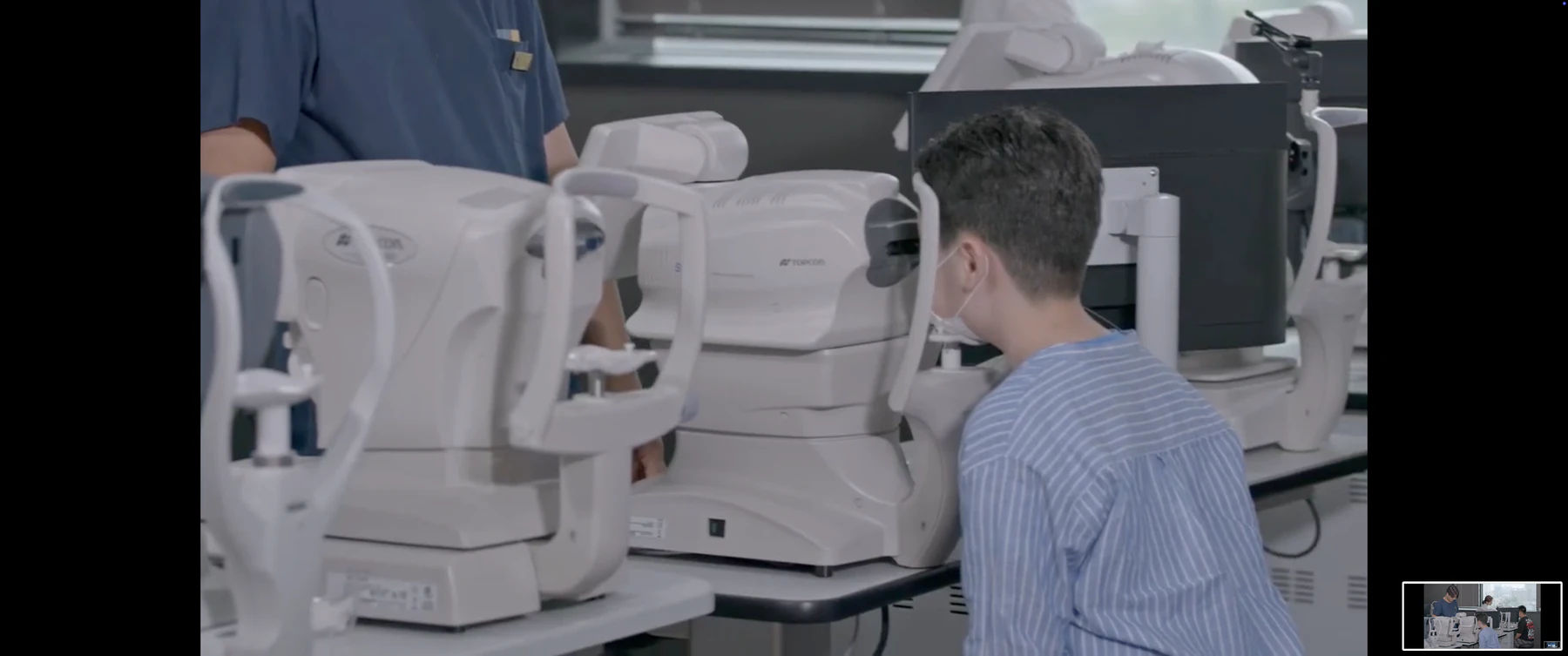
Reading an eye chart is only one part of the decision. Corneal surgery changes tissue that must remain structurally stable, so the distribution of corneal thickness and the shape of the cornea matter alongside the prescription. A dilated retinal examination can also be important, particularly in higher myopia.
Contact lenses can temporarily alter corneal shape. The appropriate lens-free interval depends on lens type and the stability of repeated measurements, so follow the examining clinic's instructions rather than a universal number found online.
| Examination | What it checks | Why it affects the plan |
|---|---|---|
| Manifest and cycloplegic refraction | Current prescription and stability | Confirms the correction target |
| Corneal topography or tomography | Shape, symmetry, and elevation | Screens for patterns that may increase risk |
| Pachymetry | Corneal thickness and distribution | Supports tissue and residual-bed planning |
| Tear-film and lid assessment | Dry-eye signs and meibomian-gland function | May require treatment before repeat measurements |
| Pupil and optical assessment | Low-light pupil and higher-order aberrations | Helps discuss glare and night-vision expectations |
| Dilated retinal examination | Peripheral retina and macula | Checks other causes of reduced vision and myopia-related risk |
LASIK, surface ablation, and lenticule extraction are not interchangeable
LASIK creates a corneal flap and reshapes underlying tissue with an excimer laser. Surface procedures such as PRK or LASEK reshape the cornea without a flap but generally have a different early recovery pattern. Lenticule extraction creates and removes a small disc of tissue through a small incision without a LASIK-style flap.
None of these methods is automatically best. Corneal findings, prescription, dry-eye status, occupation, contact-sport exposure, expected recovery, and the surgeon's assessment all matter. Glasses, contact lenses, or a phakic lens may remain reasonable alternatives.
| Option | Core feature | Questions to discuss |
|---|---|---|
| LASIK | Flap plus excimer-laser reshaping | Flap considerations, dry eye, night vision, residual tissue |
| PRK or LASEK | Surface treatment without a corneal flap | Early discomfort, epithelial healing, return-to-work timing |
| Lenticule extraction | Small incision and intrastromal lenticule removal | Treatable prescription range, centration, surgeon experience |
| Phakic IOL | Lens placed inside the eye while the natural lens remains | Anterior-chamber depth, endothelial cells, pressure, retinal health |
| No surgery | Glasses or contact lenses | Comfort, lifestyle, and risk tolerance |
How should you plan the visit and follow-up?
Do not book a nonrefundable procedure date before eligibility is confirmed. Keep the examination day flexible, especially if dilation or repeat measurements are needed. If surgery proceeds, arrange a companion or transportation and do not plan to drive immediately afterward.
Your departure date should account for the first postoperative checks and for the possibility that the doctor advises more observation. Obtain a written summary that includes the procedure, device, medications, emergency contact, follow-up schedule, and what records to share with an eye doctor at home.

Before purchasing flights, ask the clinic how much schedule flexibility is needed and which postoperative visits must occur in Seoul.
Questions that reveal the quality of a consultation
A high-quality consultation explains why a procedure is recommended, what alternatives remain, what may limit the result, and what follow-up is required. It should not pressure you to decide before your questions are answered.
Ask for a copy of your key measurements and consent information in a language you understand. Be cautious when a provider guarantees a specific visual result, treats a discount deadline as a medical reason, or avoids discussing dry eye, glare, undercorrection, overcorrection, and the possibility of still needing glasses.
Frequently asked questions
Can I have LASIK on the day I arrive in Seoul?
You should not assume so. Contact-lens effects, dilation, dry eye, or inconsistent measurements may require additional time or repeat testing before a responsible decision can be made.
How long should I stay in Korea after LASIK?
The needed stay varies with the procedure, examination findings, and surgeon's follow-up protocol. Confirm required postoperative visits before booking a departure date.
Is LASIK in Korea suitable for high myopia?
High prescription alone does not answer candidacy. Corneal shape, thickness, expected tissue removal, tear film, and retinal health must be assessed, and a phakic lens or another option may be discussed.
Should I choose the clinic with the lowest advertised price?
Compare the examination, both-eye status, medications, follow-up, enhancement policy, and emergency support included in the quote. Price cannot substitute for candidacy and safety information.
Will I definitely stop wearing glasses?
No procedure can guarantee lifelong glasses-free vision. Residual prescription, healing variation, presbyopia, and later eye changes can still make glasses useful.
Medical references
This article was checked against public guidance from medical authorities and professional organizations.
Medical information standards
This article was prepared from publicly available ophthalmology guidance and the clinic's examination process. A diagnosis or treatment plan can only be made after an individual eye examination and consultation.
- Clinic director: Pung GyeHyeon, MD · Ophthalmologist
- Organization: Gangnam Central Eye Clinic · Seoul, Korea
- Published / last updated: 2026-09-13 / 2026-10-05
This article is general medical information and is not a substitute for personal diagnosis or treatment. Seek prompt eye care for sudden vision loss, severe pain, marked redness, flashes, or a new curtain-like shadow.