





It may reduce how often some people need them, but it does not cure lens aging or guarantee glasses-free near and distance vision. Suitability depends on your cornea, prescription, tear film, lens health, and tolerance for the visual trade-offs. Glasses and contact lenses remain valid alternatives.

Why does presbyopia make close-up vision harder?
Presbyopia is the age-related loss of the eye's ability to focus on near objects. The National Eye Institute notes that it commonly becomes noticeable in middle age as the natural lens becomes less flexible. People may hold text farther away, need brighter light, or develop eyestrain and headaches.
It is different from farsightedness, although both can make near work difficult. A person may also have myopia, astigmatism, cataract, dry eye, retinal disease, or glaucoma, which can alter the symptoms and the appropriate correction.
How do monovision LASIK and lens replacement differ?
Glasses and contact lenses remain the simplest and least invasive options. Surgical discussions may include monovision with corneal laser treatment, other corneal approaches available in a particular country, or lens-based surgery when the natural lens is cloudy or lens replacement is otherwise being considered.
Corneal laser treatment reshapes the front surface of the eye and leaves the natural lens in place. Lens-based surgery removes the natural lens and replaces it with an intraocular lens; it is not simply another type of LASIK. If cataract is involved, the cataract lens selection guide explains the lens choices and optical trade-offs.
A procedure's commercial name does not describe its full trade-off. Ask what each eye will be targeted for, what range of vision is expected, and which situations are likely to require glasses.
| Approach | How it addresses near vision | Key trade-offs |
|---|---|---|
| Reading or progressive glasses | Adds optical power for near tasks | No surgery; glasses required |
| Multifocal contact lenses | Provides more than one optical zone | Comfort, handling, and adaptation vary |
| Monovision | One eye favors distance and the other near | Binocular balance, depth perception, night vision |
| Corneal presbyopia strategy | Changes corneal focus distribution | Availability, candidacy, optical symptoms, future changes |
| Lens-based surgery | Replaces the natural lens with an IOL | Intraocular risks, lens design, retinal and optic-nerve health |
Should I try monovision contact lenses before LASIK?
Monovision intentionally leaves the eyes with different focal targets. Some people adapt well; others dislike the imbalance, reduced depth perception, or low-light performance. A contact-lens simulation may help the patient experience the concept before a permanent corneal procedure, although it cannot reproduce every surgical effect.
The trial should include realistic activities: reading a phone, using a computer, walking stairs, driving when permitted, and working in dim light. Discuss whether the dominant eye and target difference are appropriate.
Who needs more evaluation before presbyopia surgery?
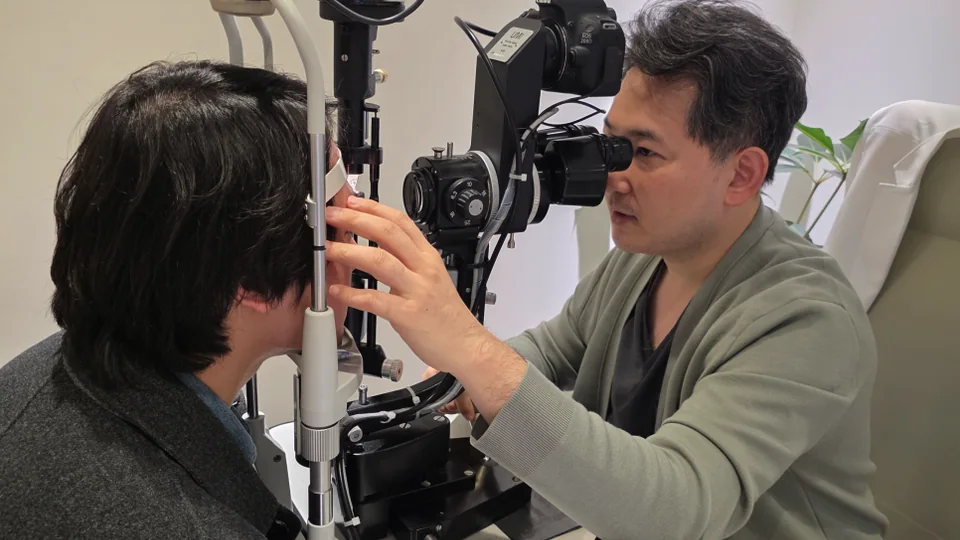
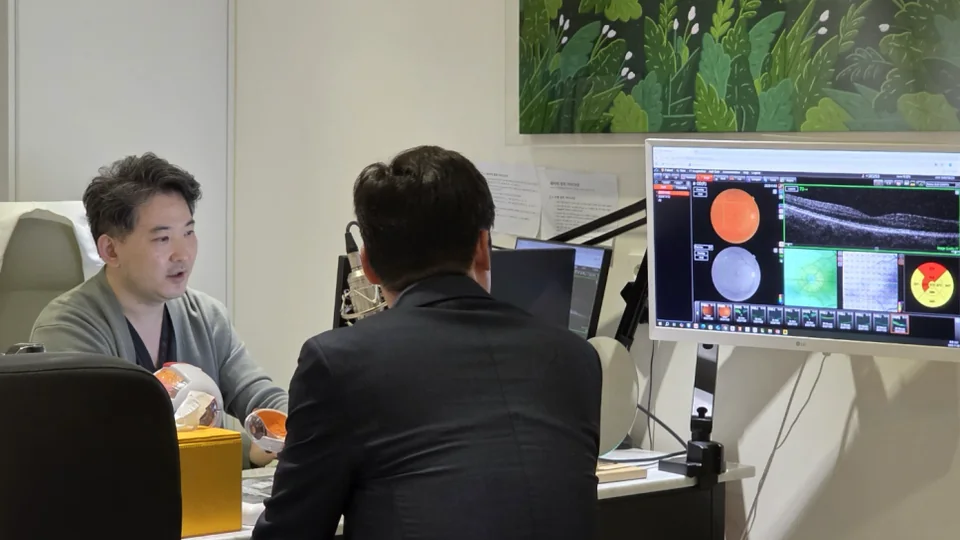
The evaluation may include distance and near refraction, binocular vision and dominance, corneal shape and thickness, tear-film status, pupil behavior, slit-lamp examination of the natural lens, pressure, and a dilated retinal examination. The importance of each test depends on age, symptoms, prescription, and medical history.
If cataract is already reducing vision, a corneal procedure may not address the main cause. If the natural lens is clear and vision corrects well with glasses, the risks and permanence of lens replacement need careful discussion.
An unstable tear film can also affect the reliability of measurements and comfort. The dry-eye testing guide explains why symptoms, tear stability, and eyelid findings are assessed together before deciding on treatment.
Bring your usual reading and screen distances, current glasses, and a list of night-driving or fine-detail tasks.
Will I still need glasses after presbyopia laser surgery?
A realistic goal is useful vision across the patient's priority distances with an understood plan for glasses when they improve comfort or precision. Presbyopia continues to change with age, and cataract can later develop even after corneal laser treatment.
Avoid any promise that one procedure permanently eliminates reading glasses for every task. Ask what happens to distance vision, contrast, night driving, and future cataract calculations.
Frequently asked questions
Can LASIK fix presbyopia?
Standard LASIK does not restore the natural lens's focusing flexibility. Monovision LASIK may reduce reading-glasses dependence for selected patients by giving the eyes different targets.
What is monovision?
It is a strategy in which one eye is targeted more for distance and the other more for near. Adaptation, depth perception, and low-light vision should be considered, and a contact-lens trial may be helpful.
Is lens replacement better than laser surgery for presbyopia?
Neither is universally better. Cataract status, age, refractive error, cornea, retina, optic nerve, visual goals, and tolerance for intraocular risk all affect the decision.
Will I never need reading glasses after surgery?
That cannot be guaranteed. Fine print, prolonged reading, low light, residual prescription, and future eye changes may still make glasses useful.
What should I bring to a presbyopia consultation?
Bring current glasses, medication and eye-history details, and the actual distances used for your phone, books, computer, hobbies, and work.
Medical references
This article was checked against public guidance from medical authorities and professional organizations.
Medical information standards
This article was prepared from publicly available ophthalmology guidance and the clinic's examination process. A diagnosis or treatment plan can only be made after an individual eye examination and consultation.
- Clinic director: Pung GyeHyeon, MD · Ophthalmologist
- Organization: Gangnam Central Eye Clinic · Seoul, Korea
- Published / last updated: 2026-09-13 / 2026-10-03
This article is general medical information and is not a substitute for personal diagnosis or treatment. Seek prompt eye care for sudden vision loss, severe pain, marked redness, flashes, or a new curtain-like shadow.