





There is no universal astigmatism cutoff for every eye. A toric IOL is generally considered when repeat measurements show enough regular corneal astigmatism to leave a meaningful blur after cataract surgery. Irregular or asymmetric patterns need careful corneal evaluation because a standard toric IOL may not be the right solution.

What problem does a toric IOL address?
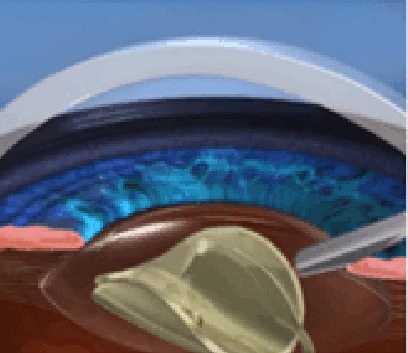
A toric IOL has different optical powers along different meridians. When placed at the planned axis, it can reduce regular corneal astigmatism at the time of cataract surgery. It does not treat every source of blurred vision and does not guarantee that glasses will never be needed.
The natural lens can contribute to the astigmatism measured in glasses. Because cataract surgery removes that lens, the plan focuses heavily on corneal measurements and the astigmatism expected after surgery.
Why are repeated measurements important?
Tear-film instability, contact-lens wear, eyelid pressure, prior corneal surgery, or irregular corneal shape can make readings disagree. When topography, keratometry, and biometry do not align, treatment of the ocular surface or repeat testing may be more appropriate than rushing to calculate a lens.
Measurements also inform whether the astigmatism is regular enough for a toric lens and how the surgical incision may affect the final result.
| Measurement | Question answered | Reason to repeat |
|---|---|---|
| Keratometry | How curved are the main corneal meridians? | Tear-film fluctuation or device disagreement |
| Corneal topography or tomography | Is the astigmatism regular and where is the axis? | Suspicious asymmetry or prior surgery |
| Biometry | What IOL power and predicted result are calculated? | Poor fixation or inconsistent readings |
| Posterior corneal assessment | Could the back surface change the total estimate? | Relevant to total corneal astigmatism |
| Ocular-surface evaluation | Are dry-eye findings reducing measurement quality? | Treat first when instability is significant |
Why does rotational alignment matter?
The cylinder correction works along a specific axis. The surgeon marks or digitally registers that axis and places the lens accordingly. If a toric lens rotates away from the intended orientation, its astigmatism-reducing effect can decrease and residual cylinder can remain.
Ask how axis planning, image registration, and postoperative position checks are performed. If vision does not match the expected result, the evaluation should distinguish residual refractive error, lens position, ocular-surface fluctuation, retinal limits, and other causes.
Can a toric lens also provide near vision?
Toric optics can be combined with monofocal, extended-depth-of-focus, or multifocal designs. A toric monofocal lens generally targets one principal range, while toric presbyopia-correcting models may broaden the range of unaided vision but introduce additional optical considerations.
Choose the base optical strategy first: which distances matter, how often you drive at night, and how much glasses use is acceptable. Then determine whether toric correction is suitable for the measured corneal astigmatism.
Toric describes astigmatism correction. It does not, by itself, tell you whether the lens is monofocal, multifocal, or extended-depth-of-focus.
What should be confirmed before surgery?
Ask for the exact lens model, intended axis, refractive target for each eye, expected need for glasses, and what will be checked if residual astigmatism remains. Discuss previous LASIK or PRK, corneal scars, dry eye, retinal disease, glaucoma, and any condition that may limit visual quality.
The goal is not simply the smallest postoperative cylinder number. It is a stable plan that supports the patient's most important activities with understood trade-offs.
Frequently asked questions
What is a toric IOL?
It is an intraocular lens with astigmatism-correcting power along a planned axis, used in eligible eyes when the natural lens is replaced during cataract surgery.
At what level of corneal astigmatism should a toric IOL be considered?
There is no single cutoff that applies to every eye. The decision uses repeatable corneal measurements, the predicted residual astigmatism after the incision, available lens powers, ocular-surface stability, and the patient's visual goals. Residual cylinder may still remain after surgery.
What happens if a toric IOL rotates?
Rotation can reduce the intended correction. The clinician checks lens orientation and other causes of blur before discussing observation, glasses, laser correction, or lens repositioning.
Do I still need glasses with a toric monofocal lens?
Often yes, especially for ranges not targeted by the lens. A distance-targeted monofocal lens usually does not provide full near vision without glasses.
Can irregular astigmatism be treated with a toric IOL?
A toric IOL is generally designed for regular corneal astigmatism. Irregularity requires careful corneal evaluation and may change the lens strategy.
Medical references
This article was checked against public guidance from medical authorities and professional organizations.
Medical information standards
This article was prepared from publicly available ophthalmology guidance and the clinic's examination process. A diagnosis or treatment plan can only be made after an individual eye examination and consultation.
- Clinic director: Pung GyeHyeon, MD · Ophthalmologist
- Organization: Gangnam Central Eye Clinic · Seoul, Korea
- Published / last updated: 2026-09-13 / 2026-09-24
This article is general medical information and is not a substitute for personal diagnosis or treatment. Seek prompt eye care for sudden vision loss, severe pain, marked redness, flashes, or a new curtain-like shadow.